Three Migrations to Shopify Plus
Three Migrations, One Platform
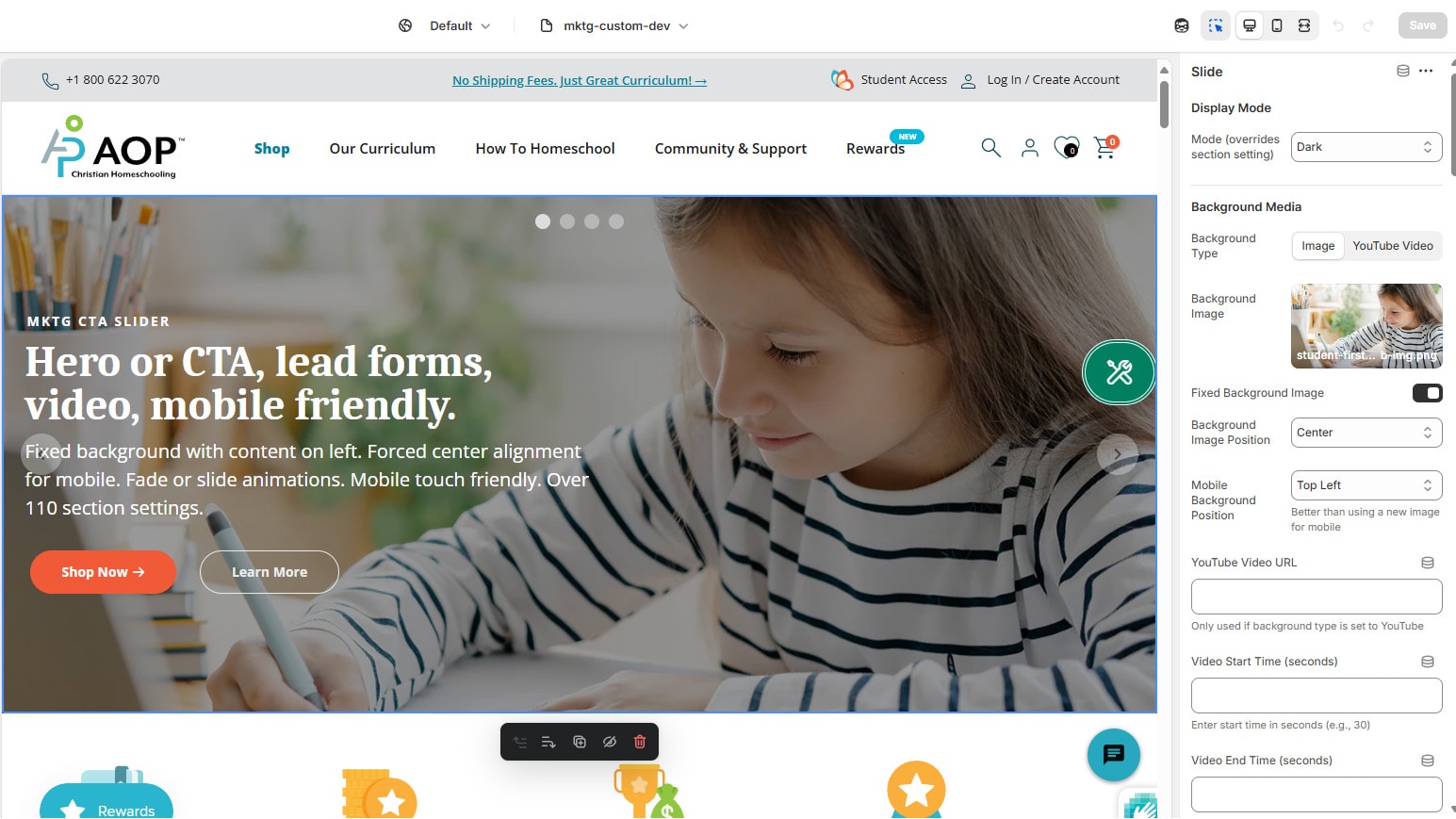
I planned and led migrations of three enterprise e-commerce properties to Shopify Plus. Each migration replaced paid third-party apps with custom Liquid sections and configurable Shopify schemas, giving marketing teams the ability to build and edit sections directly instead of depending on app-store functionality.
Custom Sections Over Paid Apps
Rather than leaning on the app ecosystem for marketing functionality, I built reusable, schema-driven Liquid sections tailored to each property's content needs. Schema settings exposed layout and content controls to marketing without touching code, while the underlying sections stayed consistent and maintainable across storefronts.
This is a separate system from Master Blocks, the HTML/CMS block system built for WordPress and standalone pages. The Shopify sections are Liquid-native and schema-driven, built specifically for the Shopify theme architecture.
Collaboration and Ongoing Support
As the developer on each migration, I worked directly with designers and business stakeholders to build conversion-focused custom marketing sections, responsive across devices and consistent with each brand's design system. I made sure the markup I built was ADA-compliant; a third-party accessibility widget (AccessiBe) covered site-wide accessibility beyond what the custom sections handled directly. Analytics ran through Google Tag Manager, GA4, Shopify Analytics, Shoplift, and Crazy Egg. After each launch, I stayed on for bug fixes and production support.
Working Across Platform Constraints
The Shopify Tips write-up covers the practical side of this work in more depth: theme selection, staging workflows, and the tradeoffs of customizing versus extending Shopify's default Horizon theme. Across all three migrations, the priority was the same: keep the upgrade path open, build additively, and avoid core theme changes that would leave a store stuck on an unsupported foundation.